 Call Us:
  Mail Us:


How to Read and Calibrate a Vernier Caliper for Industrial Machining
 By Admin |
  June 4th, 2026
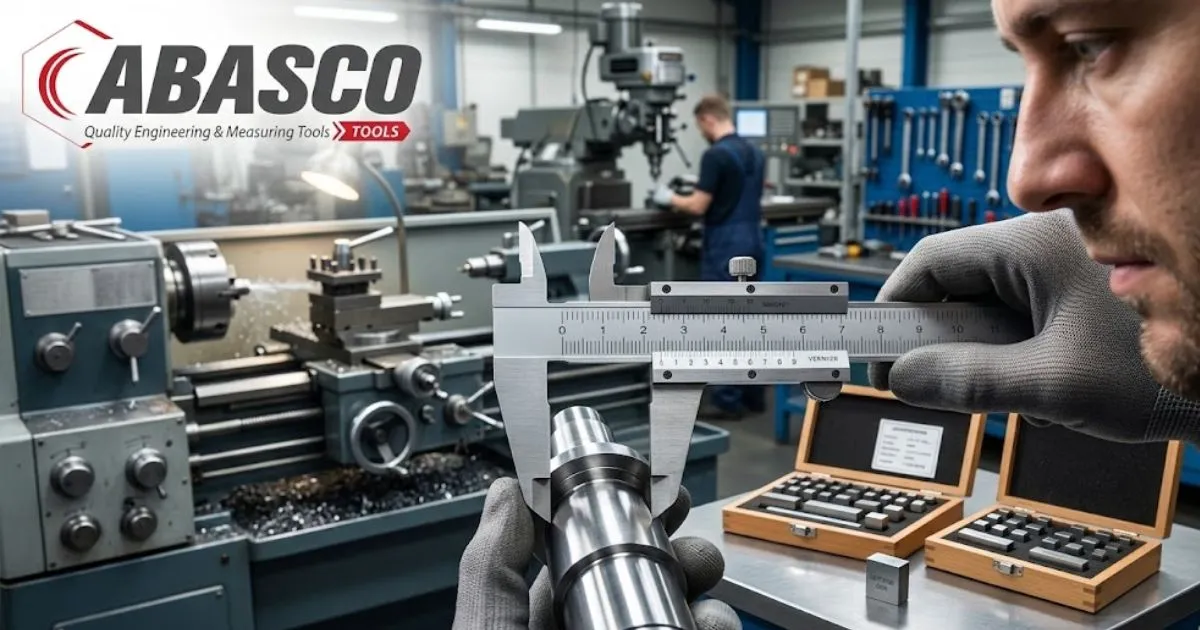
We are all aware that precision is the backbone of industrial machining. Even a tiny measurement error can affect product quality, machine performance, and production costs. This is why the vernier caliper remains one of the most trusted measuring tools in workshops, factories, and manufacturing units. Despite the rise of digital instruments, machinists still rely on vernier calipers for accurate and dependable measurements.
Hence, choosing a reliable vernier caliper supplier in UAE is equally important for industries that prioritize precision, durability, and long-term machining efficiency. Understanding how to read and calibrate a vernier caliper correctly is essential for maintaining machining accuracy and ensuring consistent industrial performance.
What is a Vernier Caliper?
A vernier caliper is a precision measuring tool used to gauge internal dimensions, external dimensions, and depths with high accuracy. Unlike ordinary rulers, it can measure to fractions of a millimeter. A vernier caliper generally consists of:
- Main scale
- Vernier scale
- Outside jaws
- Inside jaws
- Depth rod
- Lock screw
Industrial machinists across the globe use vernier calipers to measure shafts, pipes, holes, machine parts, and metal components during fabrication and inspection processes.
How to Read a Vernier Caliper
Reading a vernier caliper may look difficult at first, but once the process is understood, it can become simple and efficient. Here are the key steps for accurately reading a Vernier caliper.
Check the Zero Position
The first notable step to read a vernier caliper is to check the zero position. Before measuring with a vernier caliper, close the jaws completely. The zero mark on the vernier scale should align perfectly with the zero on the main scale. If they do not align, the tool may have a zero error that must be considered during measurement.
Measure the Object
Next, place the object between the jaws and close them gently. Try to avoid excessive pressure because it can affect the reading and damage delicate components.
Read the Main Scale
After measuring the object, look at the zero mark on the Vernier scale. Write the value on the main scale just before this zero mark. This gives the main scale reading. For example, if the Vernier zero lies just after 24 mm, the main scale reading is 24 mm.
Read the Vernier Scale
Now identify the line on the Vernier scale that perfectly matches a line on the main scale. Multiply this aligned division by the least count of the caliper. If the least count is 0.02mm and the 6th line aligns perfectly:
6 × 0.02 = 0.12 mm
Calculate the Final Reading
To calculate the final reading, add the main scale reading and vernier scale reading.
For example, 24 mm + 0.12 mm = 24.12 mm. This is the final measurement.
Importance of Vernier Caliper Calibration in Industrial Machining
In industrial environments, measurement tools are constantly exposed to dust, vibration, coolant, and rough handling. Over time, this can affect the accuracy of the tool. In such a context, regular calibration of industrial machining tools ensures the vernier caliper delivers reliable readings and meets machining standards. Improper calibration can lead to:
- Component mismatch
- Poor fitting of machine parts
- Production defects
- Material wastage
- Reduced operational efficiency
Regular calibration is therefore essential in precision engineering industries.
How to Calibrate a Vernier Caliper
Here’s how to calibrate a vernier caliper properly to ensure accurate measurements and maintain precision in industrial machining tasks.
Clean the Instrument
Before calibration, wipe the jaws and scales with a lint-free cloth. It’s because dirt or metal particles can influence proper readings.
Inspect for Damage
Check whether the jaws are worn out, bent, or loose. Remember, damaged calipers should not be used for precision measurements.
Verify Zero Error
Verifying zero error is an important step in calibrating a vernier caliper. Hence, close the jaws completely and inspect the zero alignment. If there is any deviation, record the zero error.
Use Gauge Blocks
Place certified gauge blocks between the jaws and compare the displayed measurement with the standard size. This can help verify accuracy across different measurement ranges.
Adjust if Necessary
Some Vernier calipers allow fine adjustments using calibration screws. So, if the error exceeds acceptable industrial tolerance, recalibration or professional servicing may be required.
The Closing Thoughts
Accurate measurement is the foundation of successful industrial machining, and mastering the use of a vernier caliper can significantly improve precision, efficiency, and product quality. From proper reading techniques to regular calibration, every step matters in achieving reliable results. So, if you are looking for durable, high-performance precision measuring instruments for industrial applications, Abasco Tools offers trusted solutions designed to meet modern machining standards. Contact Abasco Tools, one of the best tools suppliers in Dubai UAE, and upgrade your workshop with precision measuring tools that deliver consistency, accuracy, and long-term reliability.
Related Posts







Recent Posts
Popular Posts

Categories
Tags
Join the League of Craftsmen
Contact UsGet In Touch
Find us on Facebook
