 Call Us:
  Mail Us:


What Are Non-Sparking Tools and When Are They Legally Required?
 By Admin |
  June 11th, 2026
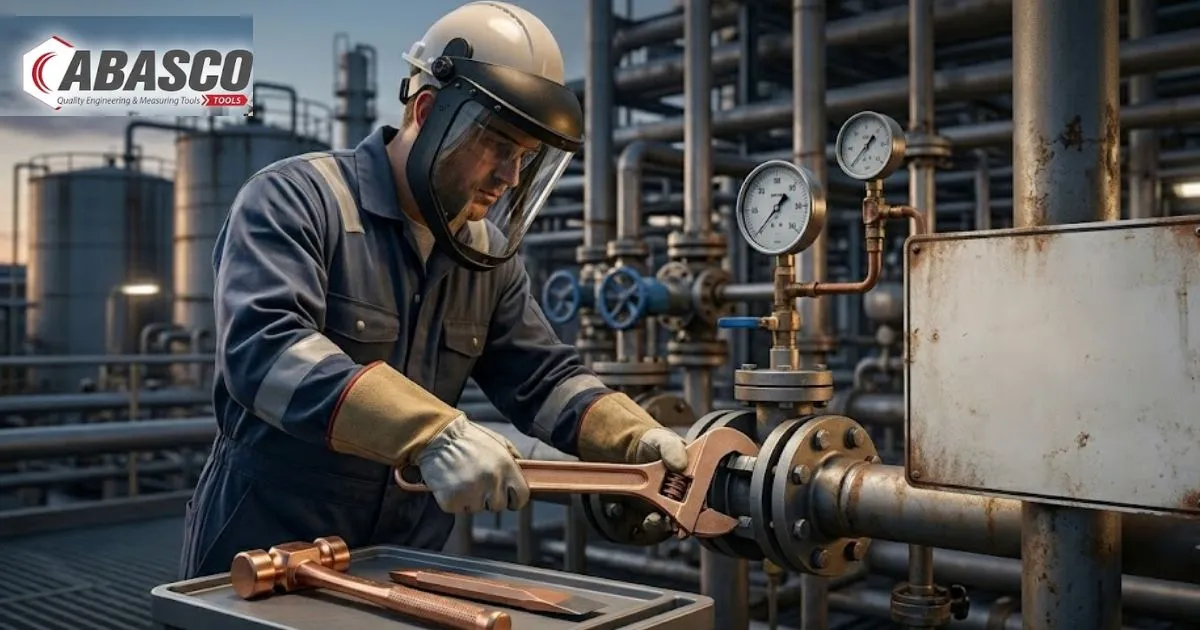
In industries where a single spark can trigger a devastating fire or explosion, safety is never optional. This is where non-sparking tools become critically important. Used across oil refineries, chemical plants, mining sites, aviation facilities and gas-handling units, these specialised tools are designed to lessen the risk of accidental ignition in hazardous environments.
While many people have heard the term, very few fully understand what these tools are, how they work, and when businesses are legally required to use them. The growing demand for non-sparking tools Dubai UAE, highlights how industries are prioritising workplace safety and compliance in high-risk operational environments. In this blog, we will explore what non-sparking tools are and when they are legally required.
Understanding Non-Sparking Tools
Non-sparking tools, sometimes called spark-resistant tools, are specially manufactured tools made from metals that produce minimal or no sparks when struck against another surface. Unlike traditional steel tools, they are usually crafted from copper-based alloys such as aluminium bronze or beryllium copper.
These tools are commonly available as hammers, spanners, pliers, screwdrivers, chisels, and wrenches. Their primary purpose is to prevent ignition in environments where flammable gases, vapours, liquids, dust or combustible materials are present.
For example, in a fuel storage facility, a small spark generated by a steel hammer could ignite petrol vapours instantly. A non-sparking hammer significantly lowers this risk, helping maintain workplace safety.
How Do Non-Sparking Tools Work?
The science behind non-sparking hand tools lies in the material composition. Traditional ferrous metals like steel create hot friction sparks when struck forcefully. Copper alloys, however, have lower tensile strength and different friction properties, making spark generation far less likely.
It is important to note that “non-sparking” does not mean “spark-proof.” Under extreme conditions, even these tools may generate tiny particles or heat. However, the probability of ignition is drastically reduced compared to conventional tools.
Many non-sparking tools are also non-magnetic, making them suitable for industries dealing with sensitive electronic equipment, MRI systems, or explosive devices.
Industries That Commonly Use Non-Sparking Tools
Several high-risk sectors rely heavily on these tools for everyday operations. Some of the most common include:
- Oil and gas industries
- Chemical manufacturing plants
- Fireworks and explosive factories
- Pharmaceutical industries
- Mining operations
- Aircraft maintenance facilities
- Marine and shipbuilding sectors
- Paint, solvent and alcohol manufacturing units
In these environments, even routine maintenance work can become hazardous if the wrong tools are used.
When Are Non-Sparking Tools Legally Required?
In many countries, workplace safety regulations legally require employers to minimise ignition risks in hazardous areas. While specific laws vary by country and industry, organisations handling combustible substances are generally expected to use spark-resistant equipment wherever ignition hazards exist.
Safety authorities such as OSHA in the United States, ATEX regulations in Europe, and PESO guidelines in India strongly emphasise the use of appropriate non-sparking equipment in classified hazardous zones.
Legally, spark-resistant tools are often required when:
- Flammable gases or vapours are present
- Combustible dust environments exist
- Workers operate near explosive chemicals
- Maintenance work is conducted in hazardous classified zones
- Safety audits identify ignition risks from conventional tools
Failure to comply with these standards can lead to severe penalties, workplace shutdowns, legal liabilities and, most importantly, life-threatening accidents.
Why Investing in Non-Sparking Tools Matters
Many businesses mistakenly view non-sparking tools as an additional expense rather than a safety investment. However, the cost of a workplace explosion, fire damage or employee injury is far greater than the price of specialised equipment.
Beyond legal compliance, these tools help organisations build a stronger safety culture, reduce operational risks and protect both employees and infrastructure. In hazardous industries, prevention is always more valuable than recovery.
The Closing Thoughts
In hazardous industries, safety can never be left to chance. Non-sparking tools are not just a regulatory requirement; they are a critical investment in protecting lives, equipment and operations from catastrophic risks. Hence, choosing the right tools from a trusted manufacturer makes all the difference. Abasco Tools stands committed to delivering premium-quality non-sparking tools engineered for maximum durability, precision and workplace safety. Whether you operate in oil & gas, chemical processing, mining or marine industries, trust Abasco Tools, the best tools suppliers Dubai UAE, to equip your workforce with reliable solutions that meet the highest safety standards. Contact us to choose unmatched safety and performance.
Related Posts
Recent Posts
Popular Posts

Categories
Tags
Join the League of Craftsmen
Contact UsGet In Touch
Find us on Facebook
