 Call Us:
  Mail Us:


Screwdriver, Ratchet, or Drill? When to Use Which: A User-Friendly Framework
 By Admin |
  February 23rd, 2026
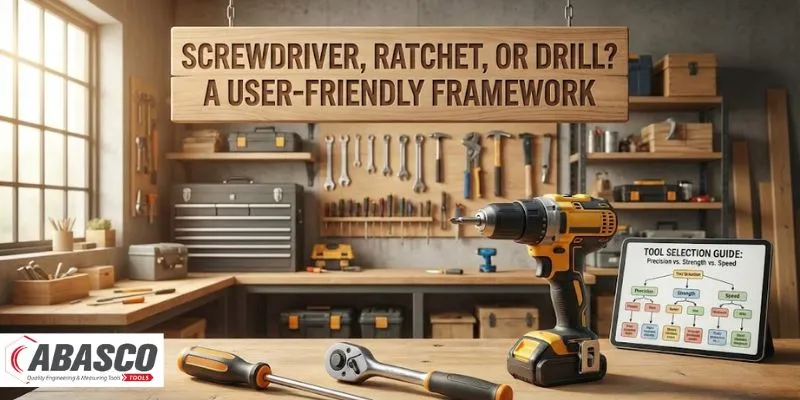
When you open your toolbox, a screwdriver, ratchet, and drill may all appear equally capable of handling the same fastening task at first glance. They all tighten, loosen, and promise effective results. But choosing the wrong one can turn a five-minute fix into a frustrating battle with stripped screws, cracked surfaces, or aching hands. However, the secret isn’t strength, it’s strategy.
Once you understand where each tool truly excels, everyday repairs and projects become faster, smoother, and surprisingly satisfying. So, this simple, user-friendly framework will help you choose the right tool with confidence, every single time. Get in touch with a renowned gauge block set supplier in Dubai, UAE, to buy your preferred tools at a competitive price.
The Screwdriver: Precision Over Power
Simple yet precise, the screwdriver offers unmatched control for careful fastening tasks. It’s designed for tasks where finesse matters more than speed. If you’re assembling furniture, fixing a light switch, tightening cabinet hinges, or working with delicate materials, a manual screwdriver is often the safest choice.
Since it operates purely on hand power, you get tactile feedback, meaning you can feel resistance before overtightening. This is crucial for soft woods, plastics, or small screws that can strip easily. Though electric tools may be faster, they can also snap heads or dig too deeply if you’re not careful.
Always use a screwdriver when:
- Working with small or delicate screws.
- You need maximum control.
- The material can be damaged by excess force.
- Space is tight, and power tools won’t fit.
Think of the screwdriver as a precision instrument, slow, steady, and reliable.
The Ratchet: Strength in Tight Spaces
A ratchet (socket wrench) is ideal when it’s a matter of delivering a strong turning force with minimal effort. It can excel at tightening or loosening nuts and bolts, especially when they require more than a screwdriver can provide. The ratcheting mechanism allows you to turn fasteners continuously without lifting the tool, making it efficient in confined areas.
If you’ve ever assembled gym equipment, worked on a bicycle, or repaired machinery, you’ve likely appreciated how a ratchet multiplies your strength while minimizing effort. A ratchet is particularly useful where a full circular swing isn’t possible, like inside engine compartments or behind appliances.
Always use a ratchet when:
- Dealing with nuts and bolts instead of screws.
- High torque is required.
- You’re working in a cramped space.
When quick progress is needed, but electric tools aren’t suitable, a ratchet becomes the perfect solution. Put simply, it’s a compact force multiplier, small in size, yet strong, capable, and highly efficient.
The Drill: Speed Meets Versatility
When speed and productivity are priorities, nothing can beat a drill. Modern cordless drills can drill holes, drive screws, and even mix materials with the right attachments. They’re indispensable for large projects like building shelves, installing drywall, or assembling multiple pieces of furniture. However, power always comes with responsibility. Without proper clutch settings or technique, drills can overtighten screws, strip heads, or damage surfaces. That’s why they’re best for medium to heavy-duty tasks where efficiency outweighs delicate control.
Always use a drill when:
- Handling large volumes of screws.
- Working with hard materials.
- Drilling pilot holes.
- Time and effort need to be minimized.
Always think of the drill as your high-efficiency workhorse that is quick, adaptable, and built to handle tough tasks with ease.
An Easy Way to Decide
If you’re not sure which tool to pick, run through these three quick checks:
How much power does the job demand?
- Minimal force: Always choose a screwdriver
- Moderate to heavy force: You can go with a ratchet or drill.
How sensitive is the material?
- Fragile surfaces: Use a screwdriver for better control.
- Average durability: The ratchet always works well.
- Tough, sturdy material: Drill always handles it the best.
How many fasteners do you need to handle?
- Just a handful: A screwdriver is sufficient.
- A moderate number: Ratchet can save the effort.
- A large batch: Drill can speed things up.
This quick evaluation helps you match the tool to the task with confidence.
The Smart User’s Toolkit
Remember, professionals rarely rely on just one tool as they always choose tools based on the task. A homeowner assembling a wardrobe might start with a drill for speed, switch to a screwdriver for final tightening, and use a ratchet for structural bolts. This layered approach ensures efficiency without sacrificing quality.
The Closing Thoughts
In conclusion, using the right tool isn’t just about convenience. It’s the difference between a smooth, professional result and a frustrating, time-consuming struggle. When you match precision with a screwdriver, strength with a ratchet, and speed with a drill, every project becomes easier, safer, and far more satisfying. Remember, smart tool choices can protect your materials, your energy, and the quality of your work.
So, are you ready to upgrade your toolkit with manual torque wrenches in the UAE? Then choose Abasco Tools, where durability meets performance for both DIY enthusiasts and professionals alike. So, don’t settle for guesswork or second-best gear. Get in touch with Abasco Tools today and equip yourself with the confidence to handle any fastening job the right way, every time.
Related Posts
Recent Posts
Popular Posts

Categories
Tags
Join the League of Craftsmen
Contact UsGet In Touch
Find us on Facebook
