 Call Us:
  Mail Us:


Hand Tools vs Power Tools: Which Saves Time & Money?
 By Admin |
  February 20th, 2026
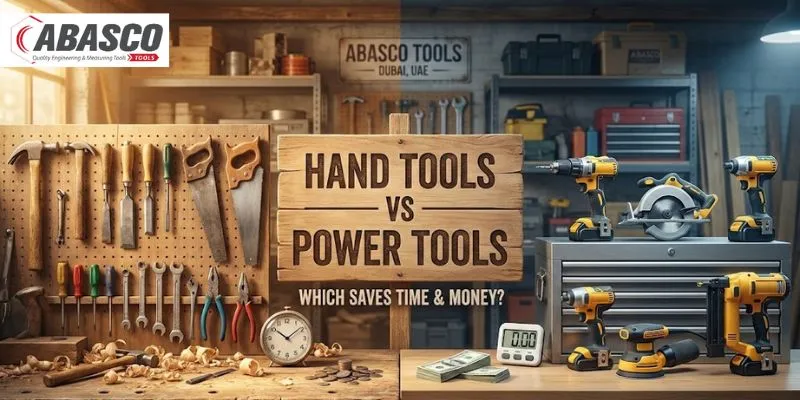
In the world of DIY projects, home improvement, and professional craftsmanship, the choice between hand tools and power tools is a decision that can significantly impact both your time and budget. While some swear by the precision and simplicity of hand tools, others advocate the speed and efficiency of power tools. Hence, understanding the pros, cons, and practical applications of each can help you make a smarter investment. This article explores the benefits of each tool category and guides you toward choosing the option that suits your needs best. Get in touch with a renowned tools supplier in Dubai, UAE, to explore a vast array of hand and power tools at affordable prices.
Understanding Hand Tools
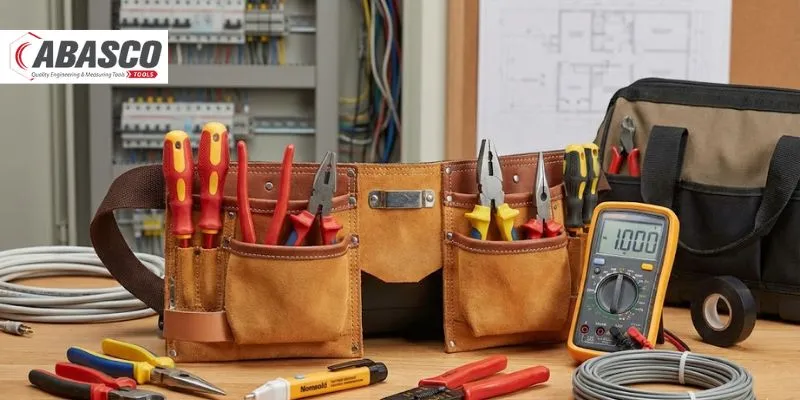
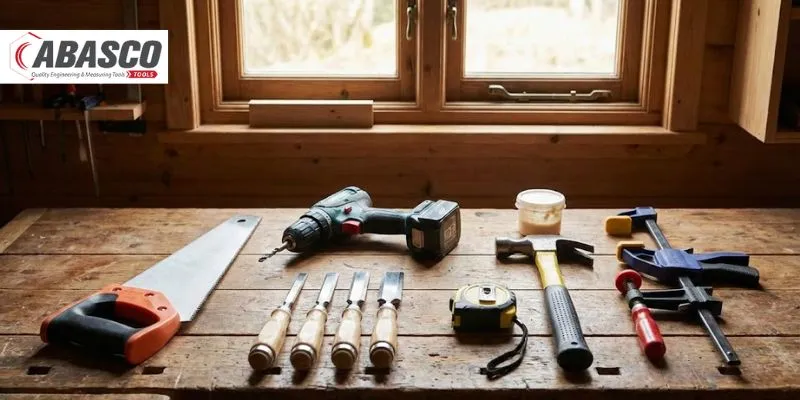
Hand tools are the traditional instruments that rely solely on human effort to function. This category includes screwdrivers, hammers, hand saws, wrenches, chisels, pliers, and more. Their appeal lies in their simplicity and versatility. They don’t require electricity or batteries, making them perfect for remote locations or quick fixes around the home.
Most Prominent Advantages of Hand Tools
- Cost-Effective: One of the most prominent benefits of hand tools is their remarkable affordability, making them an ideal choice for beginners and professionals alike.
- Low Maintenance: With no motors or electronics, hand tools require minimal upkeep. A little cleaning and occasional sharpening can keep them functional for decades.
- Precision and Control: Unmatched precision and control is another very significant advantage of using hand tools. Hand tools enable detailed, delicate work that might be difficult with power tools. For example, hand planes and chisels are essential in fine woodworking projects.
- Portability: Lightweight and easy to carry, hand tools such as ratchet spanners in Dubai, UAE, are ideal to use anywhere, whether you’re working in the backyard or on a construction site.
Drawbacks of Using Hand Tools
While hand tools offer precision, they often require more time and effort. Tasks like drilling multiple holes, cutting thick lumber, or assembling furniture with hand tools can be slow and physically demanding.
Exploring Power Tools
Power tools, on the other hand, are electric or battery-operated tools designed to reduce manual effort and increase speed. Common examples of power tools include electric drills, circular saws, impact drivers, sanders, and nail guns. These tools are indispensable in professional settings where efficiency is key.
Top Advantages of Power Tools
- Time-Saving: The first notable advantage of using power tools is that they are extremely time-saving. Power tools perform tasks much faster than hand tools. For instance, an electric drill can bore dozens of holes in minutes, while a hand drill might take hours.
- Less Physical Strain: Another very prominent advantage of using power tools is that they require less physical strain to function. These tools can do much of the work, reduce fatigue, and allow you to handle heavier tasks with less effort.
- Consistency and Accuracy: Power tools often produce uniform results, which is essential in tasks like cutting or sanding where precision matters.
- Versatility: Versatility is another very prominent advantage of using power tools. Many power tools come with multiple attachments, enabling you to perform a variety of tasks with a single device.
Drawbacks of Using Power Tools
The upfront cost of power tools is higher, and maintenance can be expensive due to motors, batteries, and moving parts. These tools also require a power source and may be less precise than hand tools for intricate tasks.
Time vs Money: Which One Wins?
The ultimate choice between hand tools and power tools depends on the type of work, frequency, and skill level.
- For Small Projects or Occasional Use: Hand tools are generally budget-friendly tools and thus often save money. If your tasks are minor, such as assembling furniture or hanging pictures, investing in a power tool might not justify the cost.
- For Large Projects or Frequent Use: Power tools save significant time and labor. Contractors and DIY enthusiasts who handle extensive work find that investing in quality power tools pays off in increased productivity and reduced physical strain.
Hybrid Approach: The Best of Both Worlds
Many professionals and DIY enthusiasts find that a combination of hand tools and power tools is the most effective approach. For example, using a power drill for pilot holes and a hand screwdriver for delicate finishing provides speed without sacrificing control. Similarly, a circular saw can quickly cut large boards, while a handsaw can manage intricate cuts.
Long-Term Considerations
- Durability: Hand tools, if made from quality steel or alloy, often outlast power tools because they have fewer parts that can break.
- Safety: Hand tools are generally safer for beginners, whereas power tools require proper knowledge and protective gear.
- Learning Curve: Mastering hand tools builds fundamental skills, while power tools can accelerate progress but might mask technique deficiencies.
The Closing Thoughts
In the end, the real winner between hand tools and power tools depends on your project needs, budget, and working style. While hand tools offer affordability, precision, and reliability, power tools deliver unmatched speed and efficiency for demanding tasks. The smartest craftsmen know that success lies in choosing the right tool at the right time. If you want equipment that combines durability, performance, and value, it’s time to upgrade your toolkit with Abasco Tools. Contact Abasco Tools, one of the best insulated screw driver set suppliers in Dubai, UAE, today and experience how the right tools can save you both time and money while taking your workmanship to the next level.
Related Posts

Recent Posts
Popular Posts

Categories
Tags
Join the League of Craftsmen
Contact UsGet In Touch
Find us on Facebook
