 Call Us:
  Mail Us:


A Detailed Introduction To Vice And Its Different Types
 By Admin |
  December 14th, 2023
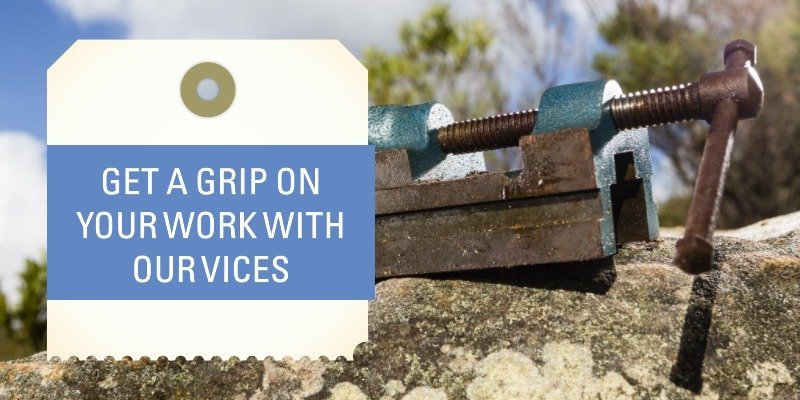
Are you wondering what bench vice suppliers in Dubai are all about? This article will break down what vice is and its different types. Learn the usage of each vice type with their construction and parts. Whether you are looking for a tool for drilling or milling, let us check which tool will best suit your needs.
Discover Types of Vices: Bench, Pipe, Hand, Leg
Understanding What Is Vice
When working in a workshop, you need something to secure the job or object to seamlessly carry out various operations such as milling, drilling, chipping, filling, etc. Vices are the devices used to hold the objects.
These mechanical devices comprise two jaws, where you can move one of the two using a lever and screw. These tools have numerous uses in countless areas, including metalworking, mechanical workshops, woodwork, etc.
These devices form bench vices when coupled with a bench. You can connect with the top bench vice suppliers in Dubai to find these indispensable tools.
Different Varieties Of Vice
Every vice built has a unique role to play. Some of the vice types include:
Bench Vice
With steel or cast iron used in its construction, the bench vice comprises tool steel jaws with grooves and a mild steel spindle handle. You will mostly find this tool in workshops. The construction of this device is such to keep its height identical to the artisan’s elbow.
Positioned over the bench, it effectively holds the job in place when filling, tapping, chipping, external threading, sawing, etc. Bench vice has the following components:
- Fixed jaw
- Spindle
- Movable jaw
- Box Nut
- Jaw plates
- Handle
Pipe Vice
Locksmith and plumbing jobs employ pipe vice to conduct C clamp and rounding shape jobs on pipes. The device has grooves cut in a V shape to securely grip cylindrical bars and pipes when threading, cutting, etc. These can attach perfectly to the end of a bench. If you want, you can contact a pin gage supplier in UAE to purchase this device.
Hand Vice
If you want to grip nails, rivets, screws, and various materials that are very tiny for you to hold using the bench vice, you can use the hand vice instead. These are also ideal for securing thin plates for drilling. While these are like a leg vice and consist of one long leg, you cannot fit it on a bench.
Leg Vice
Blacksmith shops commonly use leg vices. You can fasten a hot job in the device and use it for bending, forging, etc. You may fit it in the workbench so that it is hanging. With one leg, you may directly place it on the wood. A hinge joins the movable and fixed jaw.
A robust spring leaf is present between the jaws, allowing the movable jaw to open effortlessly. Find a good pin gage supplier in UAE who offers high-quality leg vice for an excellent job.
Conclusion
Vices are essential tools every workshop must have and cannot do without. When searching for a top-quality vice device, you will come across innumerable varieties that can be confusing. Understanding these types and their function will help you make a well-informed purchase decision.
Related Posts


Recent Posts
Popular Posts

Categories
Tags
Join the League of Craftsmen
Contact UsGet In Touch
Find us on Facebook
